

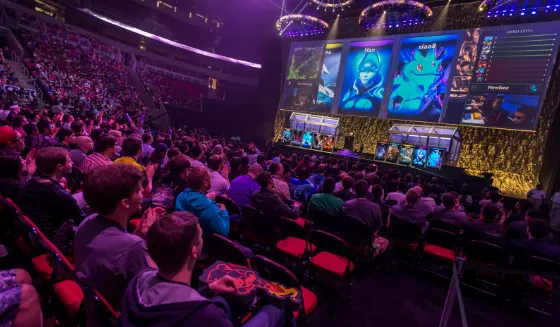
Over the past decade, esports has grown into a large-scale industry and a global entertainment centre. People no longer perceive it as a hobby, as large-scale tournaments are held that are as popular and prize money as traditional sports. Thus, the gaming industry has become an attractive field for large companies and sponsors. Cooperation is no longer limited to tech and gaming brands; banks, car manufacturers, fashion brands, and even sports teams are entering the esports market. In this article, we will talk about the corporate sponsorship trends that are developing the gaming industry and esports today.
From Gaming Gear to Global Brands
At the beginning of its history, esports was a niche industry with virtually no sponsorship deals, and if there were any, they were focused on companies selling gaming peripherals. Over time, the market expanded to include energy drinks, snacks, and internet services. Today, on a professional level, you can often see collaborations and partnerships with such market giants as Mastercard, Mercedes-Benz, and Louis Vuitton. Such cooperation is beneficial for both parties as it attracts a young audience and helps to promote brands.
If we compare esports sponsorship with traditional sports sponsorship, we can see that both agreements go beyond the placement of logos. Many modern brands create unique digital experiences, gaming resources, and exclusive events. The modern style of marketing goes much further than just signs and banners and easily engages gamers.
One of the main factors in choosing a sponsor is competitive relevance. Teams with high results and high visibility have a better chance of securing sponsorship deals. However, even novice teams can start promoting their brand and find support.
Data-Driven Decisions and ROI Measurement
As esports sponsorships become more sophisticated, data plays a central role. Brands no longer settle for exposure alone — they want measurable impact. Metrics like audience engagement, viewership hours, regional reach, and social media interaction have become key benchmarks.
The best esports organisations invest not only in players but also in advanced analytical platforms. Some even create special websites, such as cs 2 ranks, where they can track their players’ statistics using modern tools. These tools allow teams and sponsors to make informed decisions about strategies, tournament priorities, and promotions. Brands are increasingly taking sponsorship deals seriously and studying team information in detail. A good advantage for the team will be the availability of real-time reports on the success and development of the campaign, fan engagement and other important statistics.
At the same time, sponsors expect to make a profit. For example, a fintech company may prioritise teams that promote responsibility and education to reach a target audience in this area, while a fashion brand may earn money by selling team merchandise.
Regionalization and Local Partnerships
Though esports is global, regional strategies are gaining popularity. Many sponsors are now targeting local markets through region-specific teams, streamers, and events. This allows them to connect with fans in a culturally relevant way, which increases brand loyalty and engagement.
You can see how esports has grown in recent years in Southeast Asia, and one of the reasons for this is the right development strategies and brand cooperation. Mobile esports, such as PUBG Mobile or Mobile Legends, are more popular in the countries of this region. Therefore, brands that offer products or services for this target audience should enter the market.
Localised content and products play an important role in this strategy. Professional esports organisations release limited edition merchandise collections designed for specific tournaments or holidays or even regional cultures. These efforts humanise brands and create emotional connections with fans outside of the game.
New Categories: Fintech, Health, and Education
With the growing popularity of competitive gaming, new categories of sponsorship have been created. Currently, fintech and crypto companies are investing heavily in this area by sponsoring tournaments, content creators, and teams. Although these areas are just beginning to develop in the gaming industry, they are making good strides to gain a foothold thanks to innovations.
With the growing popularity of competitive gaming, new categories of sponsorship have been created. Currently, fintech and crypto companies are investing heavily in this area by sponsoring tournaments, content creators, and teams. Although these areas are just beginning to develop in the gaming industry, they are making good strides to gain a foothold thanks to innovation.
Another emerging sector is health and wellness. Everyone knows that this is a very important area and almost every industry, including esports, cannot do without it. Maintaining mental and physical health has become an important aspect of training for professional esports players. Therefore, sports nutrition companies, ergonomic equipment, and mental coaching applications have entered the market.
Strategic, Long-Term Collaborations

Most brands have already realised that esports is a very popular and profitable industry, so it is a good option for long-term cooperation and investment. Brands no longer want one-off banner placements or mentions in sponsor emails, they want a constant presence and participation in the development of the industry. Therefore, multi-year agreements allow sponsors to build real strategies in the esports ecosystem.
A good example is Red Bull’s partnership with OG Esports. The two giants of their industries have teamed up to create unique content that has never been seen before, attracting even more fans and increasing sales. This type of strategy is beneficial for both parties: teams receive financial stability and support, and brands enter a new market.
Conclusion
In this article, you have learnt what corporate sponsorship is, its main functions and role in esports. Putting all the facts together, we can confirm that this type of cooperation has helped the gaming industry to globalise and reach more markets. The current sponsorship trends have many functions and show that esports is not just following traditional marketing models, but also going beyond them. As esports is one of the fastest growing industries, the most successful brands will be those that understand the culture, invest in the right areas, and strive for long-term growth.

