

Key Takeaways
- Play-based learning forms a strong foundation for academic and social-emotional growth in young children.
- Encouraging play during the preschool years prepares children for school and life.
- Collaboration between parents and educators supports a healthy, engaging, and balanced environment for early learning.
- Scientific evidence backs play-based approaches as effective for fostering curiosity, language development, and resilience.
What Is Play-Based Learning?
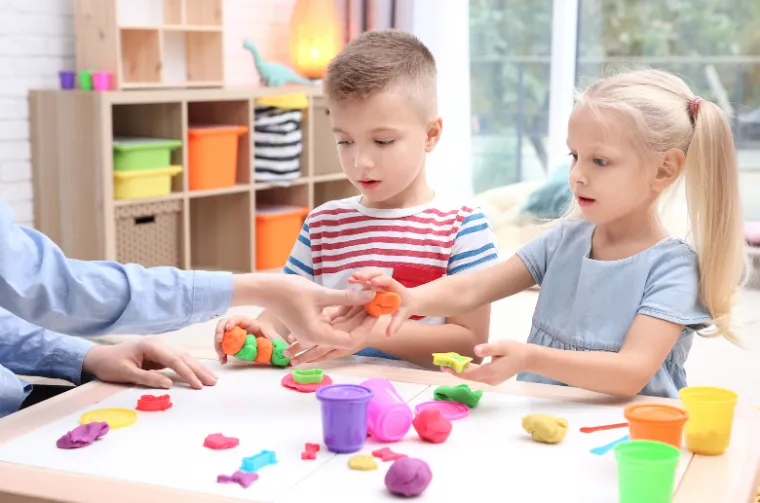
During the pivotal preschool years, children experience extraordinary cognitive, social, and emotional growth. Their daily experiences lay a foundation for later academic achievement and personal success. That is why many educational centers, such as Christian Preschool San Jose, build their curricula around preschools in an indoor learning environment. In these curricula, children are encouraged to explore, question, and learn through playful investigation rather than passively absorbing facts. Instead of focusing narrowly on worksheets or drills, children might solve puzzles, engage in role-play, or experiment with blocks and crafts, all while holistically building cognitive and interpersonal skills. In the education of young children, play bridges the gap between what children already know and the new concepts, skills, and behaviors they are right on the verge of mastering. It’s not just the core work of childhood. As children pretend, construct, and collaborate within a play-rich environment, they grow in self-confidence, learn about consequences, and absorb essential vocabulary, math, and science skills without feeling pressured.
Benefits of Play in Preschool
Play in the preschool setting isn’t just chaos or free-for-all recess. Instead, its international, thoughtful approach to learning matches young brains as they naturally develop. Through structured play, which includes summer learning programs for preschoolers, children practice focusing their attention, following directions, and developing their ability to concentrate. There are numerous, evidence-backed benefits to this approach:
- Improved problem-solving and flexible thinking, as children tinker with new ideas and work through trial and error; enriched language and early literacy skills, as children engage in storytelling, group games, dramatic play, and labeling activities; strengthened math abilities, as counting, measuring, sorting, and patterns become part of fun, interactive projects; physical confidence and motor skill refinement, which grow as kids climb, balance, mold clay, or trace shapes; and resilience and independence, which are built as children make decisions, rebound from frustration, and take initiative
Observational studies have found that children in play-focused classrooms, as well as in summer learning programs, enter kindergarten with stronger school readiness skills, higher engagement, and better peer relationships than those in more academically rigid models. Far from being a luxury, play is a powerful and adaptable tool, accessible to children of all backgrounds and learning styles.
How Play Supports Cognitive Growth
The impact of play on cognitive development stretches far beyond surface behaviors. When kids solve puzzles, build structures, or sort by size and color, they utilize sophisticated brain processes often referred to as “executive function.” It includes working memory (holding onto information to complete a task), cognitive flexibility (adapting to new situations and thinking creatively), and self-regulation (managing impulses and emotions). According to an Edutopia feature examining the science of play, even simple block building or make-believe scenarios activate areas of the brain integral to later academic success.
Take, for example, a pretend grocery store exercise: children must sort produce, count money, set up displays, negotiate prices with friends, and role-play social scripts. They not only stretch their imagination but also link new math, vocabulary, and reasoning skills to real-world experiences. When they work through a disagreement at their imaginary bakery, they’re developing negotiation techniques and empathy. These skills do not develop in isolation; instead, they intertwine with academic learning dynamically and memorably.
Social and Emotional Development Through Play
Beyond cognitive growth, play has a profound impact on social and emotional development. Group play sessions and partner games give children vital opportunities to practice cooperation, sharing, negotiation, and conflict resolution. For instance, when two kids want the same toy, a well-structured classroom uses this as a teachable moment, helping them navigate their feelings and find a compromise. These experiences help children learn the nuances of empathy, patience, and leadership.
Pretend play is especially powerful—it lets kids “try on” different roles, whether as a doctor, firefighter, or shop owner. Through these imaginary roles, they experiment with language, practice steps for resolving disagreements, and gain a broader understanding of the world. Numerous studies indicate that children engaged in group or pretend play have better emotional control, reduced anxiety, and stronger coping skills when faced with stress or new environments. In short, play strengthens not just the mind, but the whole child.
Ways to Support Play at Home
While much of play-based learning happens in schools, parents play a crucial role in extending this approach into everyday life at home. Setting aside time for free, screen-free play helps children recharge and unleash creativity. Simple strategies make a big difference:
- Offer open-ended toys such as blocks, magnetic tiles, dolls, or playdough to encourage creative construction and storytelling.
- Set up a creation station to inspire arts, crafts, and invention with recycled materials, markers, glue, and imagination.
- Designate a dress-up bin where children can experiment with costumes, hats, and props for imaginative play and make-believe adventures.
- Head outdoors for nature walks, scavenger hunts, and backyard games, which promote coordination and curiosity.
- Share books and invent alternative endings or act stories out together, reinforcing narrative skills and a love of reading.
By joining in and showing interest, parents become partners in the discovery process. Conversations generated through play can help children express their feelings and form a deeper bond with caregivers.

